You're cruising west on the Dolphin Expressway just past the 826 interchange, the sun dropping behind the Everglades tree line, and the steering wheel starts humming in your hands at exactly 60 miles per hour. Not a shake — a hum, like a phone vibrating on a glass table. You ease off the gas and it fades. You hit 60 again and it comes back, steady as a metronome. That vibration isn't random. It's your wheels telling you something specific, and ignoring it costs more than a phone call.
Wheel vibration that appears at 60 MPH and smooths out above or below that speed usually means a wheel balance issue — specifically, a weight has fallen off or the tire has developed a flat spot from sitting. A bent rim or worn suspension part can also show up at highway speed, but balance problems are the most common cause at that exact speed.
Why does the vibration show up at 60 MPH and not 40 or 80?
Every wheel and tire assembly has a natural frequency — the speed at which it wants to wobble. Think of a ceiling fan with one blade slightly heavier than the others. At low speeds it spins fine. At a certain RPM the imbalance matches the fan's natural resonance and the whole thing shakes. Your wheels do the same thing. At 60 MPH your tires rotate roughly 840 times per minute. If the imbalance lines up with the suspension's natural frequency, you feel it in the steering wheel. Go faster and the vibration often changes character or disappears because you've passed that resonance point.
What's the difference between a balance issue and a bent rim?
A balance problem feels like a steady hum or buzz in the steering wheel. It starts around 55–60 MPH and may fade by 70. A bent rim feels sharper — a thump-thump-thump you can feel in the seat as well as the wheel, and it often gets worse the faster you go. Balance issues come from missing stick-on weights or uneven tire wear. Bent rims come from potholes — like the ones on NW 7th Avenue after a heavy rain — or curb strikes. Both need attention, but a bent rim can crack without warning.
Can a flat spot on the tire cause this vibration?
Yes. If a car sits for weeks — say a snowbird's vehicle parked at a Fort Lauderdale condo from April to November — the weight of the car presses the same patch of tire against the ground day after night. The rubber stiffens in that spot. When you finally drive it, that flat spot hits the pavement 840 times a minute at 60 MPH. You feel a rhythmic thump that matches wheel speed. Flat spots often work themselves out after 20–30 miles of highway driving as the rubber warms up and flexes back to round. If the vibration doesn't fade, the tire may have internal damage.
How do worn suspension parts play into highway vibration?
Your suspension has bushings, ball joints, and tie rod ends that hold the wheel in precise alignment. When those wear, the wheel can move slightly side-to-side or up-down under load. At 60 MPH the forces are high enough to make that slop oscillate. You'll feel a loose, wandering vibration rather than a sharp shake. The steering may feel vague on center. This isn't a tire problem — it's a safety problem. Worn suspension parts can separate at speed.
What about tire pressure — can low PSI cause vibration at 60?
Low pressure changes the tire's shape and stiffness. An underinflated tire flexes more, builds heat, and can develop a wobble that shows up at highway speed. But pressure-related vibration usually comes with other signs: the car pulls to one side, the TPMS light is on, or the tire looks visibly low. Check pressure first — it's the cheapest diagnostic step. The correct PSI is on the door jamb sticker, not the tire sidewall.
How do you know if it's the front wheels or the rear?
Front wheel vibration comes through the steering wheel. You feel it in your hands. Rear wheel vibration comes through the seat and floorboard. Your passengers feel it before you do. If the whole car shakes but the steering wheel stays steady, start with the rear. This matters because front wheels handle steering and braking forces — they wear differently and balance weights fall off more often from brake heat.
The video is a diagnosis guide for exactly this speed band: why a car or steering wheel shakes between about 55 and 75 MPH, and how to narrow down the cause. He works through the highway-speed suspects in order, on the assumption that no suspension or steering part is obviously bad — which is the same starting point as the checks above. Watch it before you spend anything: his process separates the shake you feel in the steering wheel from the shake you feel in the seat, and that split is what tells you whether to start with balance, a tire, or a wheel. Key point: a vibration that lives only in a narrow speed window is information, not just annoyance — it points at rotating parts, and rotating parts can be measured.
Can you diagnose this yourself before calling a mobile tire service?
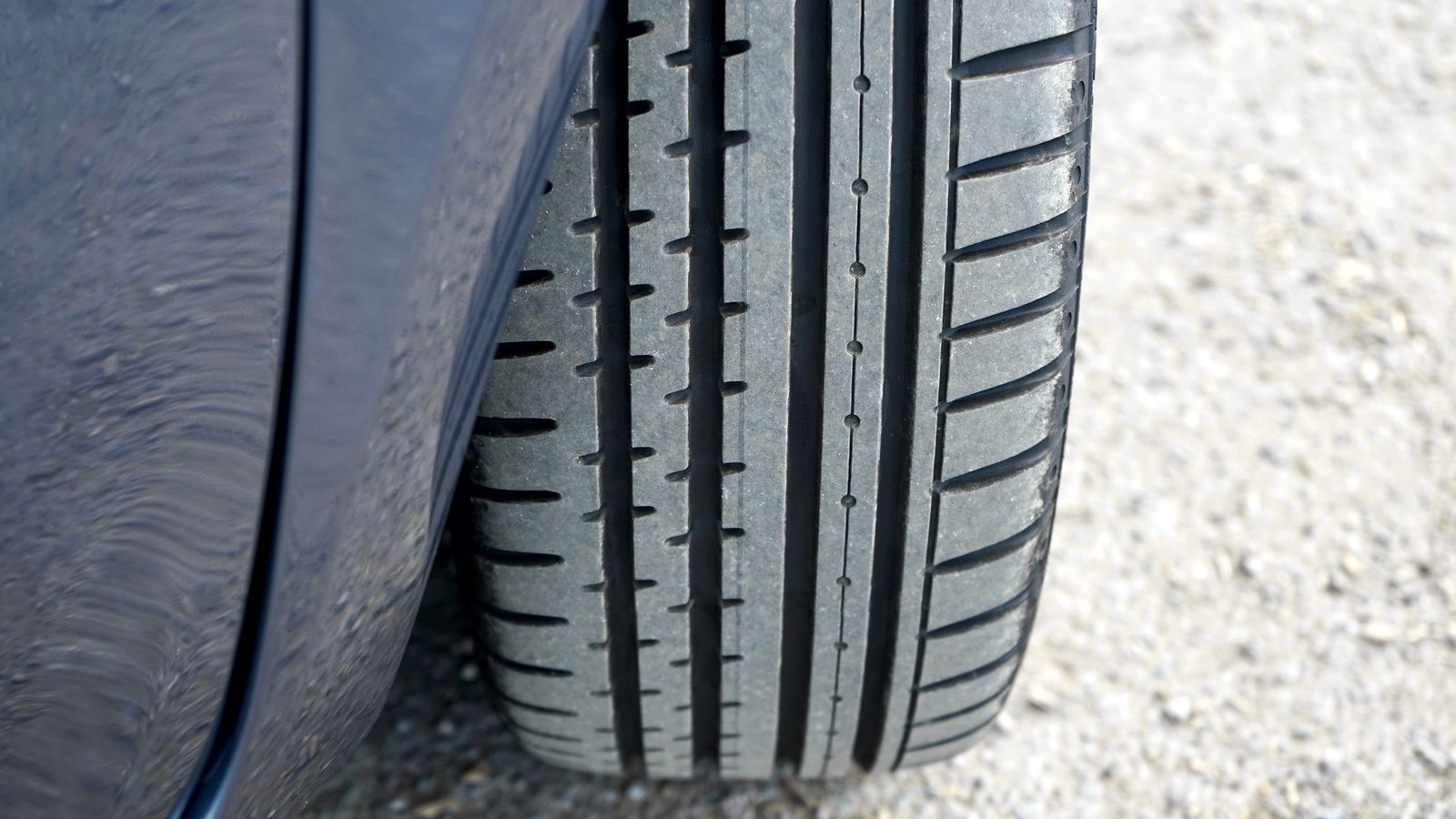
Start with the basics. Check all four tire pressures cold — first thing in the morning before driving. Look at each tire for bulges, cuts, or uneven wear. Run your hand across the tread; a cupped or scalloped pattern means suspension wear. Note exactly when the vibration happens: steering wheel only? Seat only? At 60 only, or also at 70? Does braking change it? Does turning left or right change it? Write it down. That information tells the technician where to look first and saves time on site.
What does a mobile tire service actually do for vibration diagnosis?
We come to you and check each wheel on the car: balance, rim, and tire condition, measured on site instead of guessed at. We also inspect the rim for bends, check the tire for internal separation, and look at suspension play while the wheel is off. If it's a balance issue, we fix it in your driveway or office parking lot. If it's a bent rim or worn suspension part, we tell you straight — no upsell, no guesswork. We carry common wheel weights and valve stems; specialty rims may need a shop visit.
When to call us
If the vibration at 60 MPH doesn't go away after 30 miles of highway driving, if you feel it in the steering wheel and the seat, if the steering feels loose or wanders, or if you hit a pothole on the Palmetto last week and the shake started after — call Flat Tire Miami at (786) 551-9398. We serve all of Miami-Dade County, Mon–Fri 5 PM to 7 AM and weekends 24 hours. We'll come to you, diagnose it on the spot, and get you back on the road without the tow truck wait.
 You're cruising west on the Dolphin Expressway just past the 826 interchange, the sun dropping behind the Everglades tree line, and the steering wheel starts humming in your hands at exactly 60 miles per hour. Not a shake — a hum, like a phone vibrating on a glass table. You ease off the gas and it fades. You hit 60 again and it comes back, steady as a metronome. That vibration isn't random. It's your wheels telling you something specific, and ignoring it costs more than a phone call.