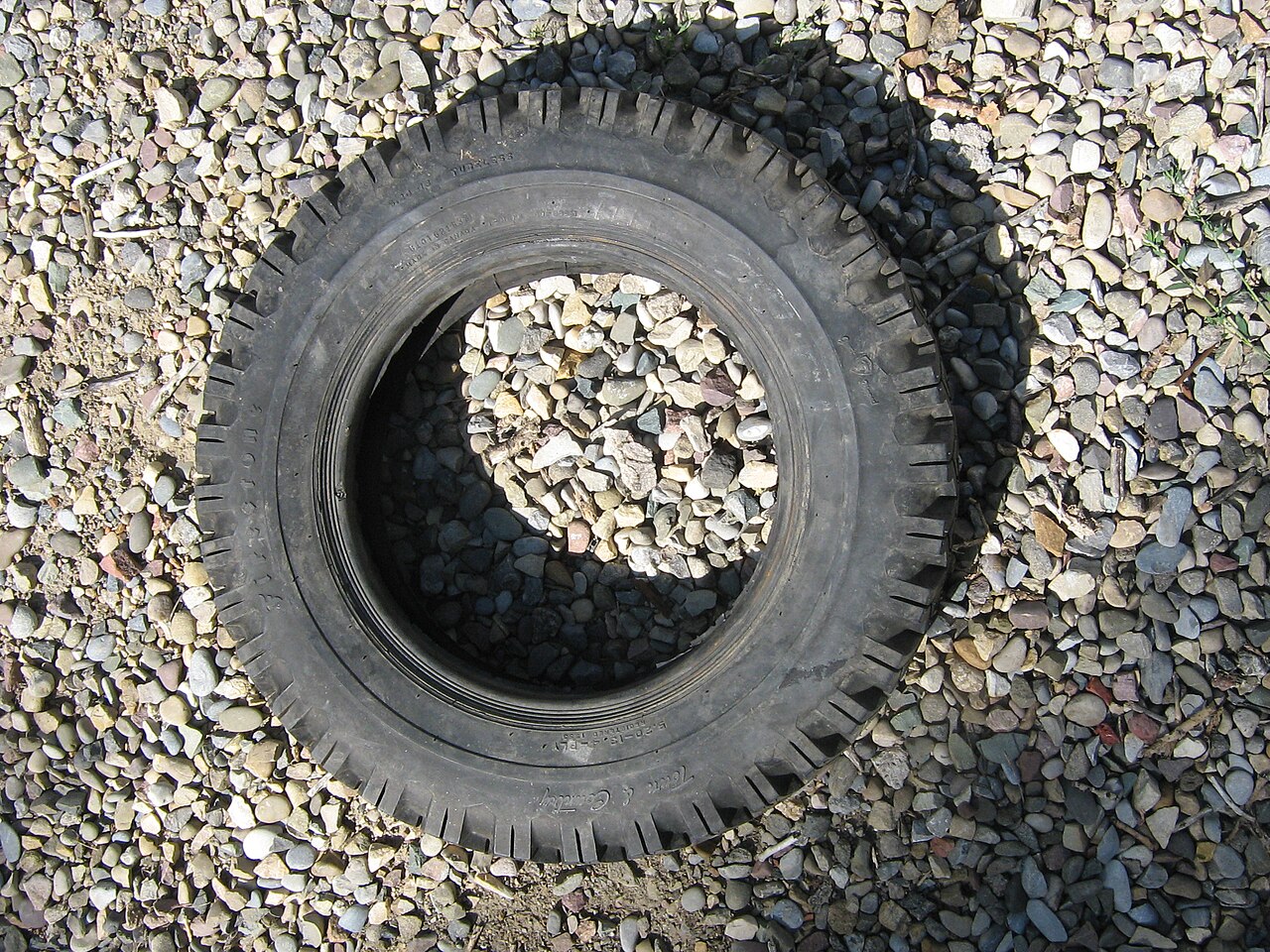
 A Tuesday before dawn on the Palmetto, heading north past the 836 interchange, the dash lights painting your face green. You hit a seam in the pavement at 65 and feel a shimmy in the steering wheel — not violent, just a lazy wobble that wasn't there yesterday. You pull onto the shoulder near Northwest 74th Street, the overheads buzzing, and kneel in the damp grass with your phone flashlight. The sidewall on the driver's rear looks like old leather left in the sun: a network of hairline cracks spidering across the rubber, some deep enough to catch a fingernail. The tread still has meat, but the sidewalls tell a different story. That's dry rot staring back at you.
What Causes Dry Rot on Tires?
Rubber is a polymer chain held together by sulfur bonds — think of it like a bowl of spaghetti where each noodle is linked to its neighbors. Heat, ultraviolet light, and ozone attack those links. In Miami-Dade, pavement temperatures hit 140 degrees in July, and the UV index stays above 8 for nine months a year. That combination accelerates the chemical reaction that turns flexible rubber brittle. Ozone, produced by lightning storms and traffic exhaust, accelerates the process further. A tire parked curbside on Biscayne Boulevard absorbs more UV and ozone than one garaged in Kendall. The result: the rubber loses its elasticity, shrinks microscopically, and cracks form to relieve the internal stress.How Old Is Too Old for a Tire?
Every tire carries a DOT code on the sidewall — four digits stamped near the bead. The first two are the week, the last two the year. A code reading 2319 means the 23rd week of 2019. Most manufacturers and the NHTSA recommend replacement at six years regardless of tread depth. In South Florida's climate, that window shrinks to four or five years for tires parked outdoors. A tire made in 2020 with 8/32 tread left can still fail from dry rot if it spent four summers baking on a driveway in Hialeah. Check the date before you trust the tread.What Does Dry Rot Look Like Up Close?
Shine a light across the sidewall at a low angle. Early dry rot shows as a faint crazing pattern — like dried mud on a lake bed — barely visible until the light catches the edges. Run a fingertip across the cracks; they feel sharp, not smooth. Advanced rot reveals cracks wide enough to see the polyester or steel cords beneath the rubber. On the tread face, look for cracks between the tread blocks that run perpendicular to the direction of rotation. If you can slide a credit card edge into a crack, the damage has penetrated past the outer rubber compound into the structural plies. That tire cannot be repaired.Why Does Low Pressure Make Dry Rot Worse?
An underinflated tire flexes more with every revolution. That flexing generates heat inside the carcass — internal temperatures can climb 30 degrees above ambient on a loaded vehicle. The extra heat speeds the oxidation reaction that breaks sulfur bonds. A tire running at 26 PSI instead of the placard 35 PSI on a daily commute from Homestead to downtown Miami adds thousands of extra flex cycles per week. The cracks deepen faster. Check pressure cold, first thing in the morning, with a dial gauge. Digital gauges read 1–2 PSI high when the battery fades.Can You Drive on Tires With Dry Rot?
Short answer: no. The cracks are stress risers. At highway speed, centrifugal force pulls the tread outward while the sidewalls bulge. A crack that looks stable at 30 mph on Northwest 27th Avenue can propagate instantly at 70 mph on the Turnpike. The result is a rapid deflation or a tread separation — both leave you steering a heavy vehicle with one corner suddenly dragging. If you must move the car, keep it under 25 mph, hazard lights on, and go straight to a shop or safe parking. Do not load passengers or cargo.DIY Video Guide
The video is a plain-English guide to reading everything printed on a tire sidewall -- and for dry rot, that is exactly the skill you need. It walks through the size code, the load and speed ratings, and most importantly the DOT date code: the four digits near the bead where the first two are the manufacturing week and the last two are the year. The host shows how to find that code on a real tire and read it in seconds, which is how you learn a tire is six years old even when the tread still looks healthy. The takeaway that ties straight back to this article: date codes do not lie, tread depth does not tell the whole story, and a tire older than five or six years in South Florida heat deserves a hard look at the sidewalls no matter how much tread is left.
How Does Heat Accelerate Dry Rot?
Think of rubber like a rubber band left on a dashboard in August. After a week it snaps with barely a pull. The same chemistry applies. For every 18-degree rise in temperature, the oxidation rate roughly doubles. A tire at 140 degrees pavement temperature degrades four times faster than one at 85 degrees in a shaded garage. That's why a tire on a boat trailer stored uncovered at a marina in Key Biscayne fails in three years while the same tire on a daily driver garaged in Coral Gables lasts seven. Parking orientation matters too — tires facing west catch the afternoon sun directly; east-facing tires get morning heat but less intense UV.What About Tire Dressings and Protectants?
Silicone-based shine products make sidewalls look black and wet for a few days. They do not stop UV or ozone damage. Some petroleum-based dressings actually extract the waxes and antioxidants that manufacturers compound into the rubber to slow aging. Water-based protectants with UV blockers can add a thin sacrificial layer, but they wash off in one good summer storm. The only real protection is shade, garage storage, or a breathable tire cover that blocks UV while letting moisture escape. Plastic bags trap humidity and accelerate sidewall rot from the inside out.When to Call Us
If you find cracks deeper than a credit card thickness, see cords through the sidewall, or your tires show a DOT date older than five years, call Flat Tire Miami at (786) 551-9398. We come to you anywhere in Miami-Dade County — home, work, or roadside — day or night. Mon-Fri 5PM-7AM, Sat-Sun 24H.