It’s 1:15 a.m. on a humid Tuesday night in Doral, and you’re parked outside a closed bar, the city lights flickering over the Miami skyline. Your phone buzzes—TPMS light on, and the dashboard’s little blue “T” flashes. You glance at the sidewall of the right‑front tire and spot a string of numbers that looks more like a parking ticket than a tire label. You wonder: “How old is this tire?”
What exactly is a tire date code and why does it matter?
A tire date code is a brief alphanumeric stamp on the sidewall that tells you when the tire was built. It’s not a mileage indicator, but it does give you a rule of thumb for how long the rubber has been in the sun, salt, and Florida’s humidity. The code is a four‑digit number: the first two digits are the week (01 – 52) and the last two are the year (00 – 99). So 2017 would appear as 1717, meaning week 17 of 2017.
How do I locate the date code on my tire?
Walk around the tire to the sidewall, near the bead where the tire meets the rim. You’ll see a block of numbers that might look like “2319” or “1125.” The numbers are usually printed in a two‑digit pair, sometimes separated by a slash or a small dot. It’s often stamped in a lighter color than the rest of the lettering so you can spot it in low light.
Can I use the date code to decide if I need a replacement?
Yes, but never as the sole factor. The U.S. Consumer Product Safety Commission recommends replacing tires that are more than five years old, regardless of tread depth. If the code shows week 23 of 2019 (2320), the tire is still under five years, but you should also check tread wear. If the tread is down to 2 mm or less, replacement is wise even if the date is recent.
What’s the worst that can happen if I ignore an old tire?
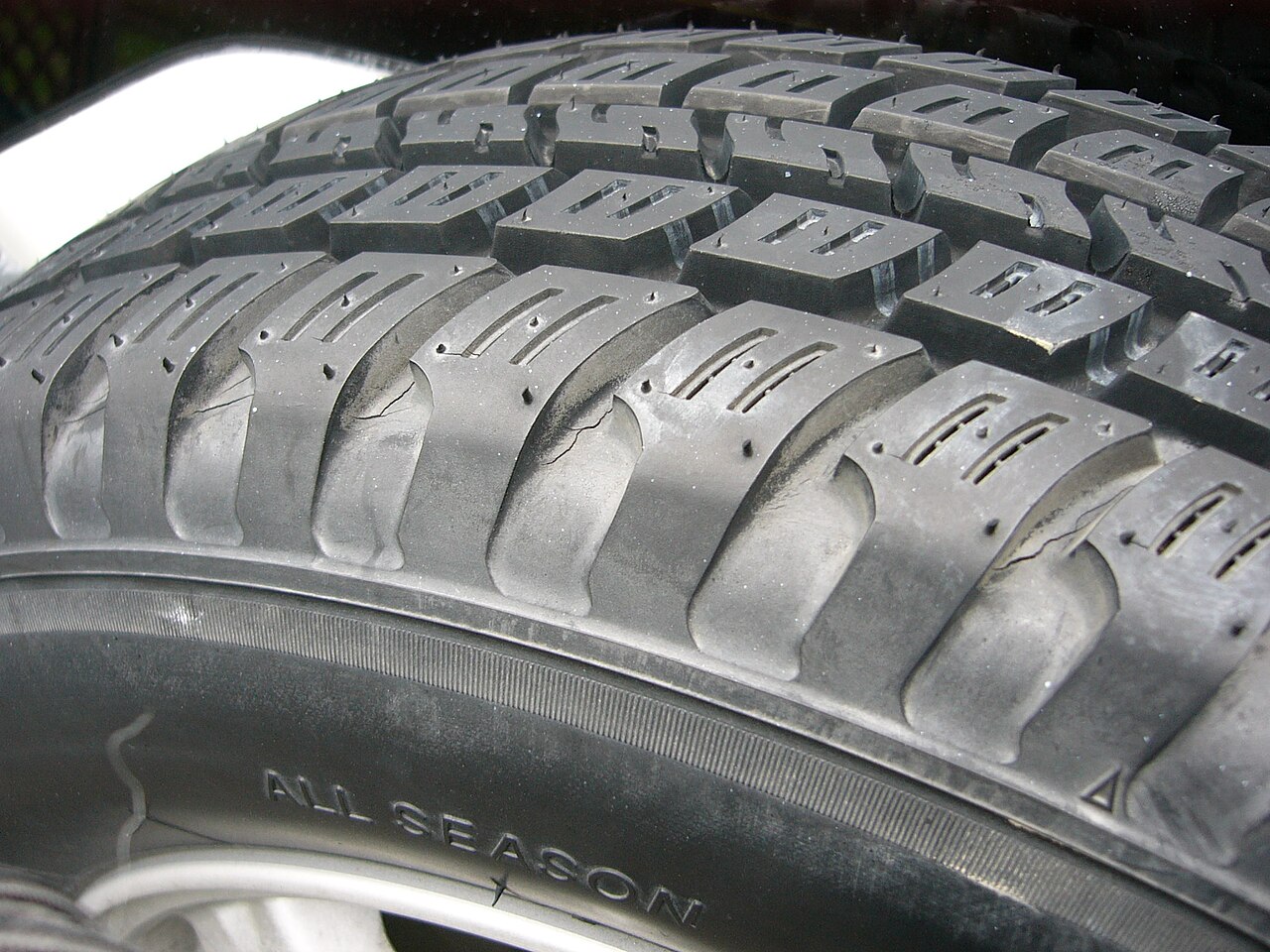
Old rubber becomes brittle and cracks under the heat of the Sun. In Miami’s 90‑plus degree summer, a cracked tire can blow out suddenly, especially on a freeway like I‑95. A sudden blowout while you’re driving between Downtown Miami and Hard Rock Stadium can turn a normal commute into a roadside emergency.
How do I read the code if it has a slash or a dot?
Sometimes the code looks like 22/15 or 22.15. The slash or dot is just a separator; the first two digits are still the week, the last two the year. If you see 2215, read it as week 22, year 2015. If you’re still unsure, call a local tire shop—most technicians can decode it for you in seconds.
Why do some tires show a “C” or “P” before the numbers?
Those letters indicate the tire’s intended use. “C” is for “Commercial” or “All‑Season” use, while “P” stands for “Passenger.” They don’t affect the date code, but they tell you if the tire is suitable for your vehicle type. A passenger car tire should have a “P.”
What if the code looks like 2127? Does that mean 2027?
No, the code only shows the last two digits of the year. 2127 would be week 21 of 2017. If you see a number that looks like 2127, it’s probably a typo or a misread. Most codes are 2017 or 2018 in our area because the manufacturer’s manufacturing plant in Fort Lauderdale stopped using the older stamping format after 2018.
How long does it take to replace a tire that’s too old?
A single tire swap on a car in Miami‑Dade County takes about 15 minutes: a quick tire change, a torque check, and a brief check for sidewall damage. That’s why a mobile tire service can get you back on the road before the next traffic light on the Airport Expressway.
When should I start replacing a tire that’s only a year old?
If the tire has a deep tread groove that’s worn to 2 mm, or if you notice a bulge on the sidewall after a heavy rain, replace sooner. In the humid heat of South Florida, tread can wear faster than the numbers suggest.
The next step is a quick demo on how to read the code yourself. Watch this short video that shows a technician pointing out the exact spot on a tire and decoding the numbers.
In the clip, you’ll see a technician walk around the tire, locate the date code block, and read out the week and year. He explains that week 22 means the tire was built between the 155th and 161st day of the year—just a way of saying “mid‑June.” He also mentions that most tire manufacturers stop using the old stamping system after 2018, so newer tires will show 2019 or 2020 codes. The key takeaway is that the code is simple: two digits for the week, two for the year. If the tire is older than five years, or if tread depth is below 2 mm, replace it, especially in the humid, salty air of Miami‑Dade County.
When to call us
Flat Tire Miami can help you when:
- You spot a cracked sidewall or a sudden blowout.
- Your tire’s date code shows it’s over five years old.
- Tread depth is 2 mm or less.
- You’re stranded on I‑95, Biscayne Boulevard, or any major corridor in Miami‑Dade County.
- You need a quick roadside swap and want a mobile service that arrives within 15 minutes.
Give us a ring at (786) 551‑9398—we’re available 24 hours a day, 7 days a week, across the entire Miami‑Dade County. Whether it’s the heat of South Beach or the humidity of North Miami, we’re ready to keep you rolling safely.
When to call us
DIY is great, but some jobs need a pro. If the problem persists, you spot anything dangerous, or you'd rather have an expert handle it, call (786) 551-9398 — Flat Tire Miami serves Miami-Dade County (Mon-Fri 5PM-7AM, Sat-Sun 24H). No pressure, no upsells.