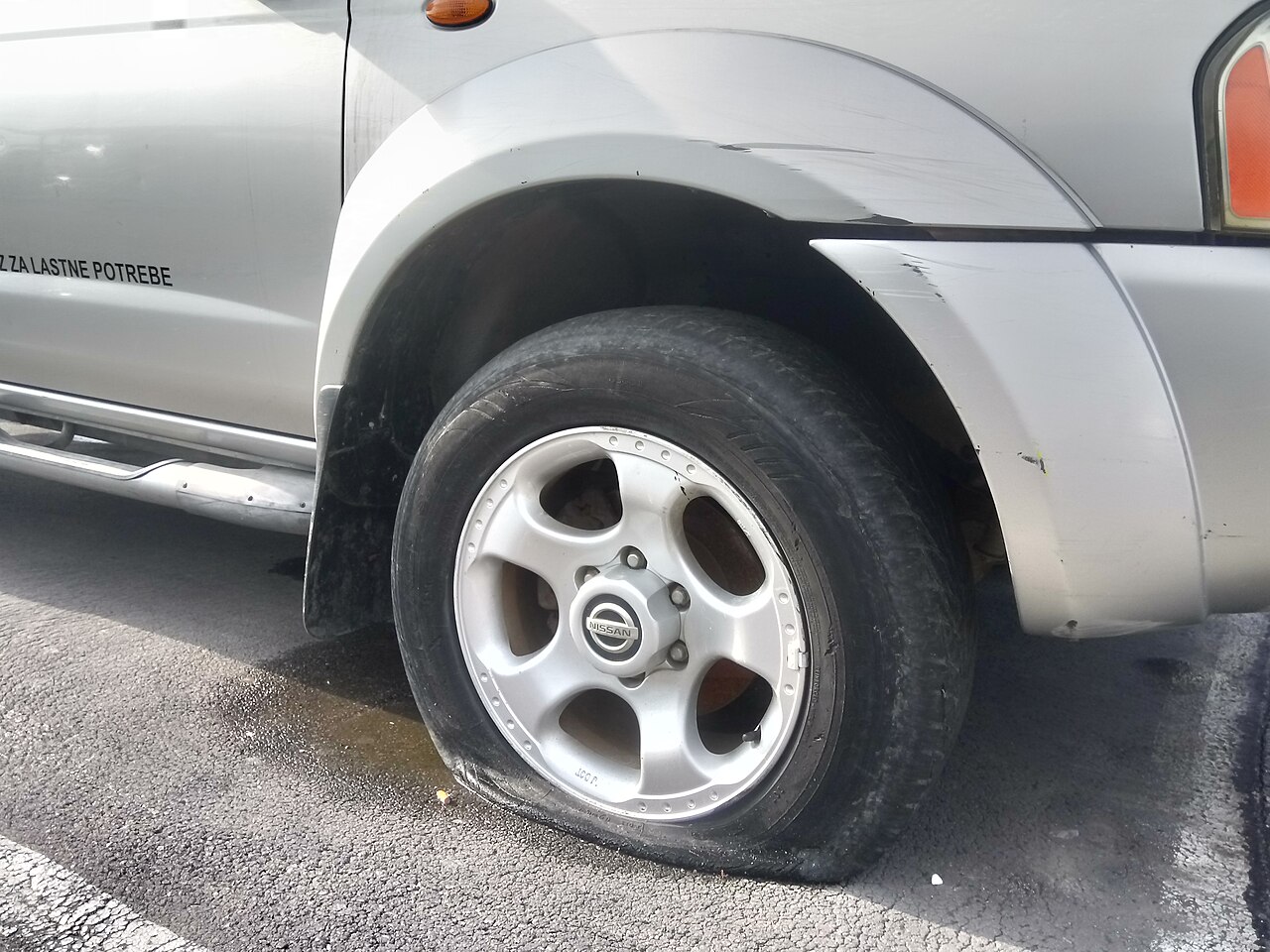
 You're westbound on Bird Road at 6:17 p.m., the sun low enough to turn every windshield into a mirror. Traffic bunches at the 57th Avenue light, and you roll forward — then the front right tire drops into a crater the size of a dinner plate. The car shudders. The steering wheel kicks left. You pull into the Publix lot on 56th Street, heart pounding, and stare at the tire. It looks round. It holds air. But something felt wrong in the chassis, a thump that traveled up the seat rails into your spine.
After hitting a pothole, inspect each tire for sidewall bulges, cuts, or separated tread blocks. Check the wheel rim for bends or cracks. Measure pressure on all four tires — a drop of 5 PSI or more signals a slow leak. If you see any bulge, cut deeper than a credit card, or a rim that wobbles when spun, do not drive on it.
What damage can a pothole do to a tire?
A pothole hits the tire two ways at once. The sidewall pinches against the rim edge — that's the pinch flat. The tread face slams into the far lip of the hole — that's the impact fracture. Both happen in a fraction of a second. The sidewall is the weak spot. It's made of thin rubber and polyester cords, not the thick steel belts under the tread. A hard pinch can snap those cords inside the rubber. You won't see the break. What you see later is a bulge the size of a grape — the air pushing out through the broken cords. That bulge can blow at highway speed without warning.How do I check the sidewall for bulges or cuts?
Park on flat ground. Turn the steering wheel full lock one way, then the other, so you can see the whole sidewall. Run your fingers along the rubber from rim to tread. Feel for a soft bubble — that's a separated cord. Look for a slice or gouge. If the cut goes deeper than the thickness of a credit card, the inner liner is likely compromised. Shine a phone flashlight across the surface at a low angle. Shadows reveal bulges your eyes miss in direct light. Check both sides of every tire. The inside sidewall takes the same hit but hides behind the wheel well.What should I look for on the tread face?
Walk around the car. Look at each tread block. A pothole impact can crack a block clean across — you'll see a hairline fissure running perpendicular to the grooves. Sometimes a chunk tears out, leaving a divot with fresh rubber edges. Run a fingertip inside each groove. Feel for raised edges or missing rubber. If the tread pattern looks shifted — blocks misaligned from one side of the tire to the other — the belts underneath may have shifted. That tire will vibrate above 45 mph and wear uneven in a week.Why does the wheel rim matter too?
The rim takes the same hit. Aluminum bends; steel cracks. Spin each wheel by hand (car in park, parking brake on). Watch the rim flange — the outer lip where the tire bead sits. A wobble of more than an eighth of an inch means a bent rim. That bend breaks the air seal. The tire will leak slow, maybe 2 PSI a day. Look for hairline cracks on the spokes, especially near the lug holes. A cracked rim can fail catastrophically. If you see any crack, put the spare on and call for a tow.The video below, "What do potholes do to your car? We asked a mechanic" from Sudbury.com, puts a working mechanic on camera to explain exactly what a pothole strike does — not just to the tire, but to the wheel, alignment, and suspension that take the hit with it. It's the professional version of the inspection you just read.
The mechanic walks through the damage a pothole inflicts and what he checks afterward — the tire, the wheel, and the components most drivers never think about. You'll hear why a tire that looks fine can still be compromised underneath, and what a pro looks for that a driveway check can miss. Watch it after your own inspection; if anything he mentions matches what you found, that's your sign to get the car on a lift.