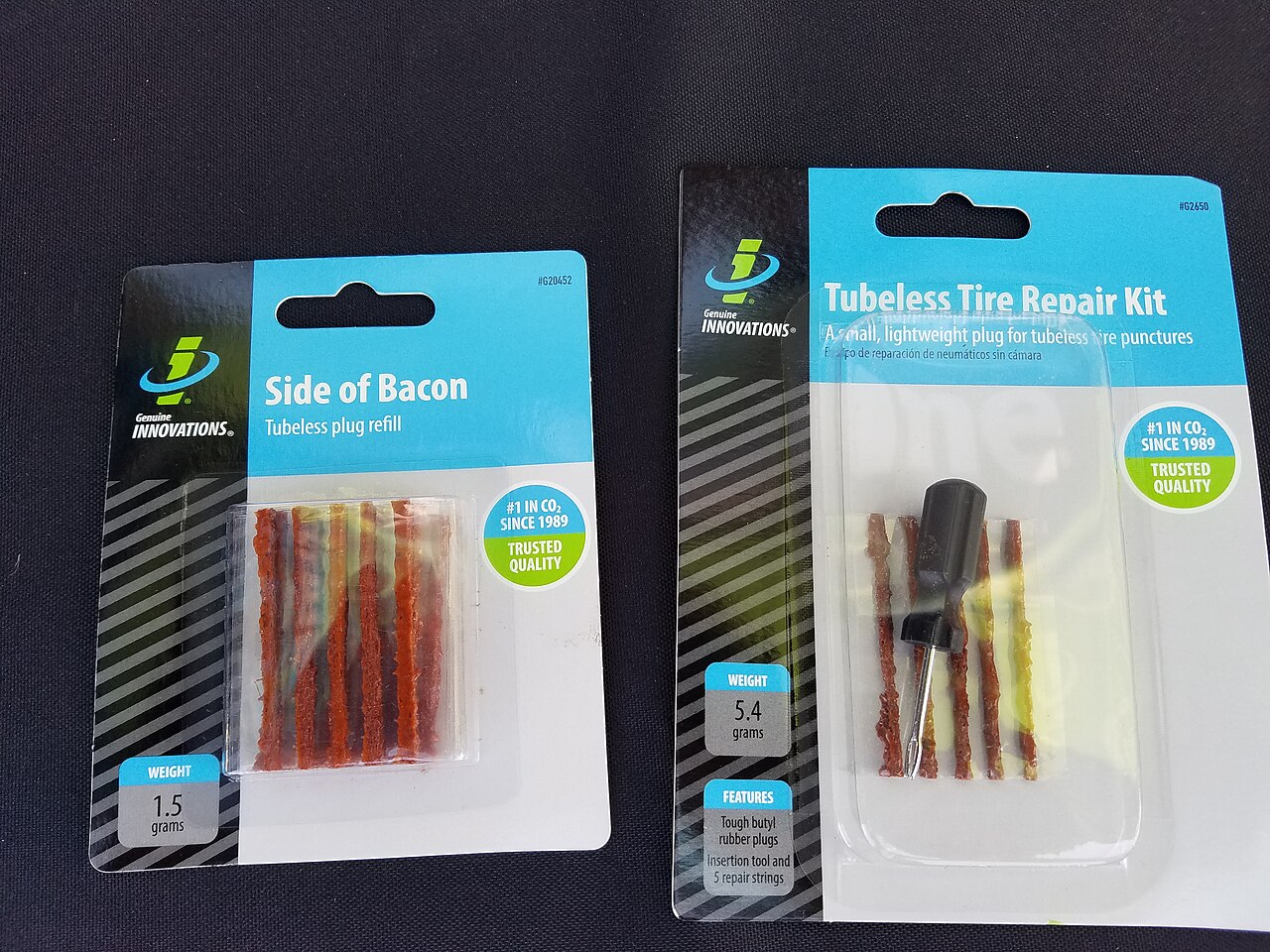
A humid Saturday afternoon on I-95, just past the Hallandale Beach Boulevard exit. The sky was doing that South Florida thing where it looks fine and then dumps rain out of nowhere. Marco was driving his work van home when the back end started to feel floaty, like the van was deciding where it wanted to go instead of him. He eased onto the shoulder, hazards blinking, and walked around to find a nail sticking out of the tread of his right rear tire. The tire was hissing. He had a plug kit in his glove box — the little T-handle tools and the sticky black rope plugs — and twenty minutes before the rain hit. Here is how to do an emergency plug the right way, so the tire holds until you can get to a shop.
An emergency tire plug is a temporary roadside fix for a small puncture in the tread only — never the sidewall. Park somewhere safe, find the leak, ream the hole with the T-handle tool, thread a rope plug through the insertion tool, push it into the hole, trim the excess, reinflate, and drive straight to a shop. The plug buys you roughly 25 to 50 miles. Get a proper repair or a new tire as soon as you can.
What is a tire plug and when is it safe to use one?
Think of a rope plug like a sticky cork for a tire. It is a black, tar-coated string that swells up inside a small puncture and blocks the air from getting out. It works because the steel belts in the tread hold it in place and the heat of the road helps it bond.
A plug is only safe on the tread — the flat part of the tire that touches the road. The sidewall, the round rubber face on the side of the tire, flexes every single rotation. A plug in the sidewall will walk out or let air past, and that can cause a blowout at speed. Same rule for the shoulder, the curved edge between the tread and the sidewall. If the damage is anywhere except dead-center tread, do not plug it. Mount your spare or call a pro.
Also skip the plug if the hole is wider than about a quarter of an inch, if you can see cords or fabric showing through, if the tire has a bulge or bubble, or if the tire was driven flat for a long stretch. A tire driven flat cooks its inner structure, and no roadside fix makes that safe again.
What belongs in a real plug kit?
A proper roadside plug kit is small and cheap, and it lives in your trunk without complaint:
- T-handle reamer — a rasp-like tool that cleans and roughs up the hole so the plug grips.
- T-handle insertion tool — has an eye like a big sewing needle for threading the rope plug.
- Rope plugs — the sticky black strings.
- Rubber cement — lubricates the plug going in and helps seal it.
- Pliers and a razor or pocket knife — to pull out the nail and trim the plug flush.
- A portable 12-volt compressor or hand pump — you must reinflate after the plug, and the gas-station pump is miles away by definition.
- Gloves, a rag, and a soapy water spray bottle — soapy water is how you find leaks and verify the seal.
No drill. No hammer. No "sealant gun." Roadside plugs are hand tools, done by hand, and that is exactly why they work — you can feel what the rubber is doing.
How do you set up safely on the shoulder?
Before you touch the tire, park like your life depends on it, because it does. Get fully off the travel lane onto the shoulder or a parking lot. Hazards on, parking brake set, and if you have a reflective triangle or vest, put it out behind the car. On I-95 or the Turnpike at night, consider that the safest move is calling for help instead of kneeling in the breakdown lane — Flat Tire Miami runs nights for exactly this reason.
You can usually plug the tire with the wheel still on the car if you can reach the puncture, but removing the wheel is easier and safer. Loosen the lug nuts while the tire is on the ground, jack the car up, and finish removing them.
How do you find the puncture and prep the hole?
If you can see the nail or screw, half the job is done. If not, listen. Rotate the tire slowly and listen for the hiss. Still can't find it? Spray soapy water around the tread and watch for bubbles — where it foams, air is escaping.
Pull the object straight out with pliers. Now take the T-handle reamer, push it into the hole, and work it in and out while twisting. This does two things: it cleans the hole and it roughs up the rubber so the sticky plug has something to grab. Push the reamer all the way through so the hole is open and uniform. When it slides in and out with even resistance, the hole is ready.
How do you insert the rope plug?
Thread one rope plug through the eye of the insertion tool so equal lengths hang on each side, like threading a needle. Coat the plug and the tip of the tool with rubber cement. Then push the tool straight into the hole until about half an inch of plug is still sticking out. Here is the key move: give the tool a quarter-turn twist, then pull it straight back out with one firm motion. The twist folds the plug inside the tire so it stays put while the tool comes free.
Trim the excess plug flush with the tread using the razor — leave a little nub, do not yank or cut it down into the hole. Now inflate the tire to the pressure on your driver's door jamb sticker (not the number molded on the tire sidewall — that is the maximum, not your car's target). Spray soapy water over the plug and watch. No bubbles means the seal is holding.
How far can you drive on a plug?
Drive like you have a bandage on a cut: gently, and straight to help. A rope plug is a temporary fix, full stop. It can get you roughly 25 to 50 miles to a shop or a safe parking spot. Keep your speed down, avoid hard cornering and potholes, and recheck the pressure when you stop.
At the shop, ask for a proper internal patch-plug repair — a combination repair done from inside the tire — or a new tire if the damage doesn't qualify. A shop will inspect the inside of the tire, which is the part you can't check on the roadside. Until then, the plug is doing its job: getting you off the shoulder and out of the rain.
Want to see the whole plug done by hand?
Watch the embedded video below, then read the summary under it. Seeing the reamer and the insertion tool in action once makes the roadside job feel familiar instead of stressful.
When should you skip the plug and call Flat Tire Miami?
Call instead of plugging if the damage is on the sidewall or shoulder, if the hole is larger than a quarter inch, if the tire has a bulge, if the cords are showing, if the tire was driven flat, or if the plug leaks after you inflate. Also call if the shoulder of the road feels unsafe — a moving car inches from your back is never worth a DIY save. If the problem persists, you spot anything dangerous, or you'd rather have an expert handle it, call (786) 551-9398 — Flat Tire Miami serves Miami-Dade County (Mon-Fri 5PM-7AM, Sat-Sun 24H). No pressure, no upsells.