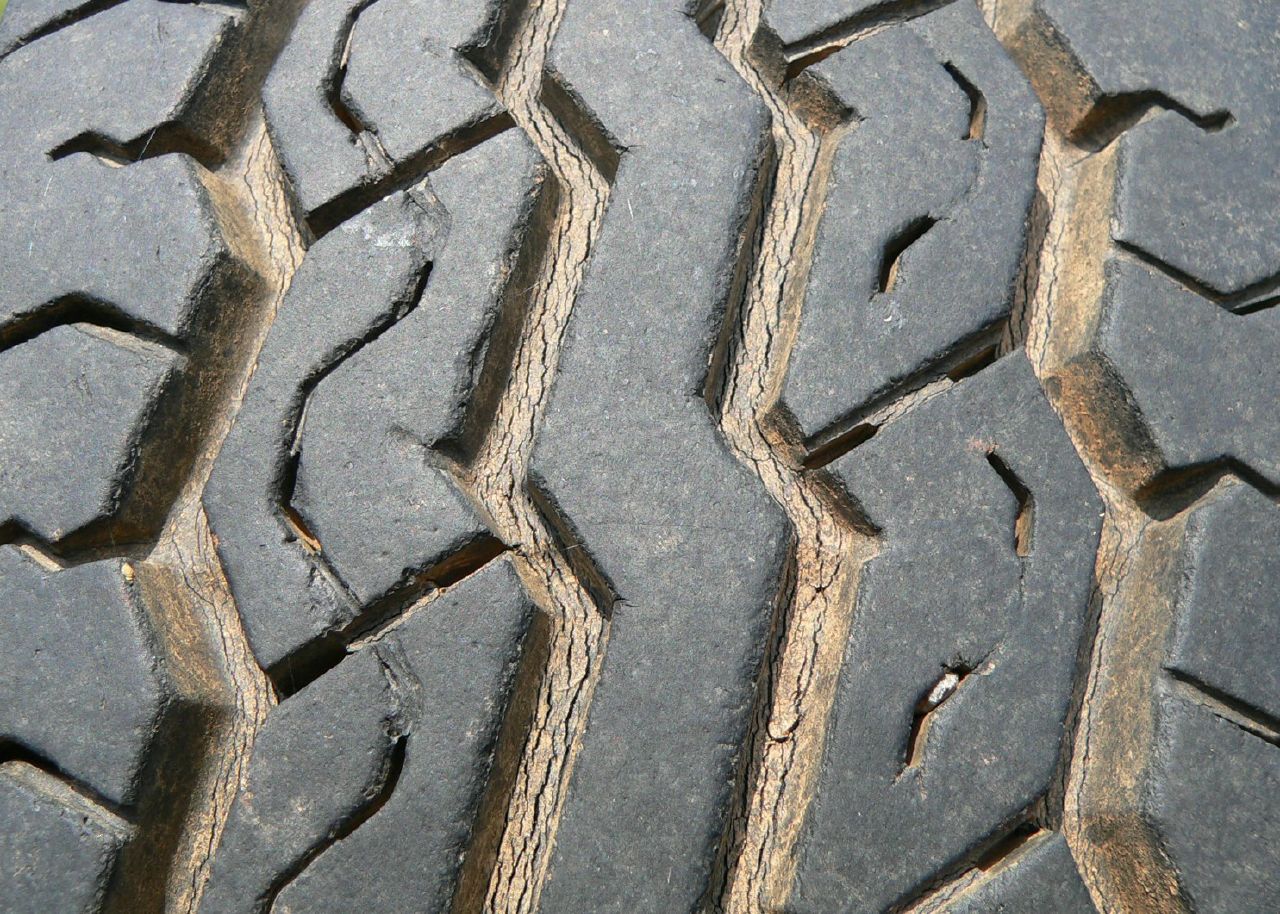
 You're heading west on the Dolphin at 6:14 a.m. when the steering wheel starts a slow shimmy that wasn't there yesterday. You pull into the gas station lot by the 826 interchange, crouch down, and run your hand across the tread. One tire feels like a washboard. Another has edges worn smooth on one side, sharp on the other. A third shows a bald spot right in the middle. Three different patterns. Three different stories about what's happening underneath your car.
A visual guide pairs well with the hand test above — here a technician from an independent Texas repair shop walks through the most common tread wear patterns one by one, so you can match what you see on your own tires to a likely cause.
The video starts with the basics — checking the tread wear indicators — then moves pattern by pattern through the ones this article covers. Cupping, he explains, comes from worn shocks or struts letting the tire bounce down the road and hammer the same spots. Center wear means overinflation, outer-edge wear means underinflation, and single-side wear points to camber that's out of spec — possibly worn ball joints, tired springs, or an alignment that's due. Diagonal swipe wear shows up on front-wheel-drive cars with bad toe settings, and heel-toe wear traces back to skipped rotations or separating steel belts. Feathering — the smooth-one-way, sharp-the-other feel across the tread — is the classic sign of toe misalignment, and he closes with flat spots from cars that sit too long. It's a straightforward shop-level rundown from someone who reads these patterns on customer cars every week, and it gives you the vocabulary to describe exactly what your tires are telling you.
What does cupping look like on a tire?
Run your palm around the circumference of the tread. High and low spots — like a washboard or corduroy — mean cupping. The dips sit evenly spaced, every few inches. You'll hear it before you see it: a rhythmic thrum that gets louder with speed. Cupping happens when the tire bounces instead of rolling — slamming down, skipping, slamming down again. Each impact gouges a divot. Shocks and struts are the usual culprits. After 50,000 miles of Miami heat and potholes, the fluid inside them loses its stiffness, the piston moves too fast, and the tire never settles. Push down hard on each corner and let go. It should rise once and stop — keep bobbing, and that corner's shock is shot. Replace shocks and struts in pairs, front or rear, never just one side.Why does feathering happen on the front tires?
Feathering is directional. Drag your hand across the tread blocks from inside edge to outside: smooth. Now reverse — outside to inside: sharp, like a row of tiny ramps. The front tires are pointed slightly toward or away from each other as they roll down Biscayne Boulevard. Walk with your toes pointed in and the outside edge of your shoe wears smooth; the tire does the same at 60 miles per hour. Even a fraction of a degree off spec will feather a set of tires within months of daily driving, and Miami heat speeds it up — baked pavement softens the rubber, and the scrubbing action gets worse. The car tracks straight, so you won't feel feathering in the wheel the way you feel cupping. Run your hand across the tread at every oil change. Catch it early and an alignment — a fraction of the cost of a new set of tires — fixes the geometry before the rubber is gone.What causes patch wear in the center or on the edges?
Center wear — the middle bald, the shoulders still grooved — is overinflation. The tire balloons like a basketball and only the center strip touches the road. You'll see it when someone fills to the max PSI molded on the sidewall instead of the door-jamb sticker's 32 to 35 PSI. On a hot August afternoon on I-95, that 35 climbs several more PSI and the center wears much faster. Edge wear — both shoulders gone, center still deep — is underinflation. The sidewalls flex too much, the tread cups inward, and the edges carry all the load. Rolling resistance jumps and fuel economy drops — on a daily 20-mile commute, that adds up to real money in gas every month. Check pressure cold: first thing in the morning, before you drive a block. The sticker on the driver's door jamb is law. Not the tire sidewall. Not what your buddy says.How do worn control arm bushings show up in the tread?
This one hides. The tire looks fine across the face, but measure tread depth at the inside edge versus the outside edge. A 3/32-inch difference means the wheel is tilting — camber changing as you drive. The control arm bushing has cracked or collapsed, so the wheel leans in under braking and out under acceleration. The contact patch shifts back and forth like a wobbling dinner plate. Giveaway: the inside edge wears faster on one front tire only. An alignment won't fix it because the geometry changes under load. The bushing has to be replaced — on most cars that's about two hours of labor plus the part.Can a bent rim cause a wear pattern that looks like cupping?
Yes. A bent inner lip — common after hitting the pothole by the Hard Rock Stadium exit on the Turnpike — makes the tire hop once per revolution. Same washboard feel, same sound. But the dips won't be evenly spaced; they cluster where the bend is. Jack the car up, shift to neutral, spin the wheel by hand, and watch the tread face wobble. A dial indicator on the bead seat tells the truth: more than 0.030 inches of runout and the wheel needs straightening or replacement.What does diagonal wear across the tread mean?
Diagonal stripes across the rear tires of a front-wheel-drive car mean the tire is scrubbing sideways as it rolls — a herringbone pattern. If the rear toe is off or the rear bushings are soft, rotate every 6,000 miles and this evens out. Skip rotation and the rear tires roar like mud tires on the highway.How do I check my own tread for these patterns?
Park on level ground, crank the wheel to one side, and look at the full tread face. Use a tread depth gauge — a few dollars at any auto parts store — and measure three grooves on every tire: inside, center, outside. Write the numbers down. Now you have a baseline. Compare inside to outside: a 2/32-inch difference or more means something is leaning. Compare center to shoulders: bald center with deep shoulders is overinflation; bald shoulders with a deep center is underinflation. Run your palm around the tread for washboard dips (cupping), and drag your hand both ways across the blocks for one-way sharpness (feathering). Ten minutes in the driveway beats a year of guessing.Frequently asked questions
Can I drive on cupped tires, or is it dangerous?
They're drivable, but they get worse fast — and the failed shocks or struts behind them hurt braking and handling. The real danger is ignoring the cause: the failed part keeps hammering the replacement tire too. Fix the suspension first, then the tire, or you'll buy both again.
Will an alignment fix feathered tires?
It stops new feathering but can't undo the sharp edges already worn in — ramped blocks stay noisy and wear unevenly. Light feathering plus an alignment and rotation buys time. If you can hear the hum from the driver's seat, the tire is done: align first, then replace.
When to call us
DIY is great, but some jobs need a pro. If the problem persists, you spot anything dangerous, or you'd rather have an expert handle it, call (786) 551-9398 — Flat Tire Miami serves Miami-Dade County (Mon-Fri 5PM-7AM, Sat-Sun 24H). No pressure, no upsells.